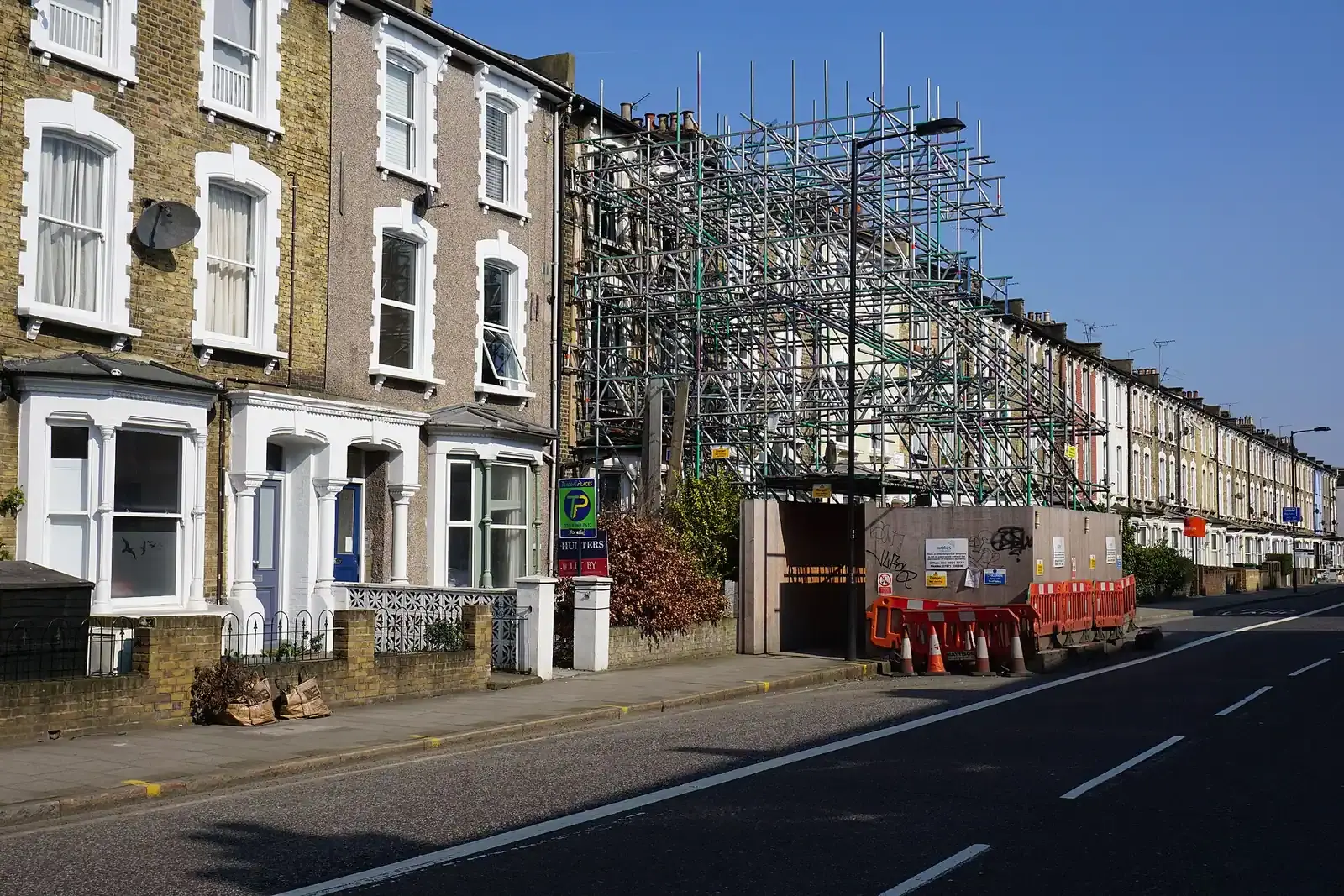
What regularisation is, and what it costs us to draw
Regularisation is retrospective building regulations approval. You apply to the council’s building control for a certificate that the work now complies. The application needs a description of the unauthorised work and, as far as is reasonable, a plan of it and a plan of any additional work needed to make it comply.
Our fee is £615 drawings + £150 survey (£765 total). It includes the measured survey, because the existing building is what is being drawn, and then the proposed corrections where the work falls short.
Why only the council can do it
GOV.UK explains that regularisation can be applied for from a local authority building control body only, and that only work carried out after 11 November 1985 can be approved this way. That matches regulation 18, which applies to unauthorised work on or after that date.
So you cannot choose a private approver for it. The council’s building control charge is set locally and varies by borough, so we ask your council for it at the start and tell you before you pay for the survey.
Opening up and the extra cost of proof
The council may require reasonable steps to find out what work is needed, including laying open the unauthorised work for inspection, making tests and taking samples. Foundations, steel beams and wall ties are the usual targets, because they are hidden once the plaster is on.
That is why the survey photographs and records every visible element and why a builder’s memory of what is behind a wall is not evidence. Where the council is satisfied, it may give a regularisation certificate, which the regulation describes as evidence, but not conclusive evidence, that the relevant requirements are met.
The cost of doing nothing
Under section 36 of the Building Act 1984, where work was done without an application, the council may by notice require the owner to pull down or remove it, or to alter it to comply. If the owner fails to act within 28 days the council may do the work and recover its expenses.
A notice cannot be given more than 10 years after completion of the work. If planning permission is also missing, the separate cost of a retrospective planning application is set out in our guide to retrospective planning permission.
By the numbers
11 Nov 1985
The date from which unauthorised work can be regularised; earlier work cannot.
Source: The Building Regulations 2010, regulation 18: unauthorised building work (legislation.gov.uk)
Council only
Regularisation can be applied for from a local authority building control body only.
Source: Building regulations approval: how to apply (GOV.UK)
Not conclusive
A regularisation certificate is evidence, but not conclusive evidence, that the requirements are met.
Source: The Building Regulations 2010, regulation 18: unauthorised building work (legislation.gov.uk)
28 days
The time a person has to comply with a section 36 notice before the council may do the work itself.
Source: Building Act 1984, section 36: removal or alteration of offending work (legislation.gov.uk)
10 years
The longest period after completion within which a section 36 notice can be given.
Source: Building Act 1984, section 36: removal or alteration of offending work (legislation.gov.uk)
Opening up
The council may require work to be laid open for inspection, with tests and samples.
Source: The Building Regulations 2010, regulation 18: unauthorised building work (legislation.gov.uk)
Regularisation costs: common questions
Can I regularise work done before 1985?
Not under this regulation, which covers unauthorised work carried out on or after 11 November 1985. Older work is a different question that we would discuss with the council.
Source: The Building Regulations 2010, regulation 18: unauthorised building work (legislation.gov.uk)
Will the council make me pull the work down?
Regularisation is the way to avoid that. The regulation lets the council require reasonable steps and additional work to secure compliance, and the application sets out the work you propose. We cannot promise the council’s decision.
Source: The Building Regulations 2010, regulation 18: unauthorised building work (legislation.gov.uk)
Do I need planning permission as well?
Possibly. Building regulations and planning are separate. If the building also lacks planning permission, a retrospective planning application is a second route with its own council fee.
Sources
- The Building Regulations 2010, regulation 18: unauthorised building work (legislation.gov.uk)
- Building regulations approval: how to apply (GOV.UK)
- Building Act 1984, section 36: removal or alteration of offending work (legislation.gov.uk)
About the author. Ben Shaukat is Managing Director of Property Architecture Ltd, which trades as Planning Drawings.
Published by Planning Drawings. Checked against the sources above on . Planning rules change; check your council before you build.